
Back to Learn With Tom

Complexity Series

Complex systems, their philosophy, and the models we use to study them

2available courses
3planned courses
4available units
Courses in Complexity

Interaction, adaptation, explanation, and simulation each reveal a different kind of complex-systems problem.

Begin
Separate components inside a system boundary become a whole-system pattern through local influence lines.
2 available units

Introduction to Complex Systems

A system is complex when its parts interact in ways that shape the behavior of the whole. Because parts affect one another, the system can develop feedback, thresholds, memory, adaptation, cascades, resilience, fragility, and collective behavior.

13 units 11 planned Extra decks
AlphaThis course is in alphaVisit Course
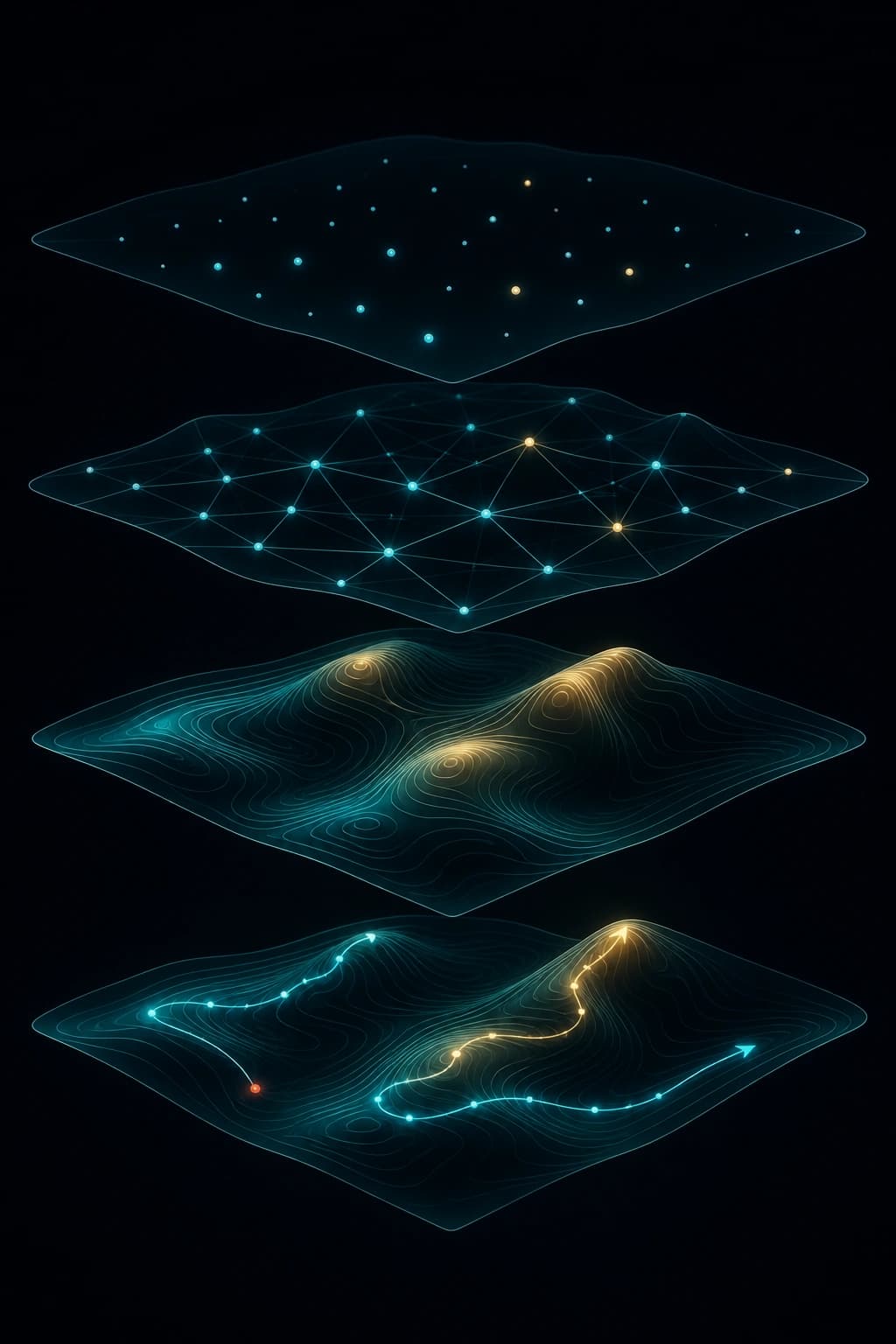
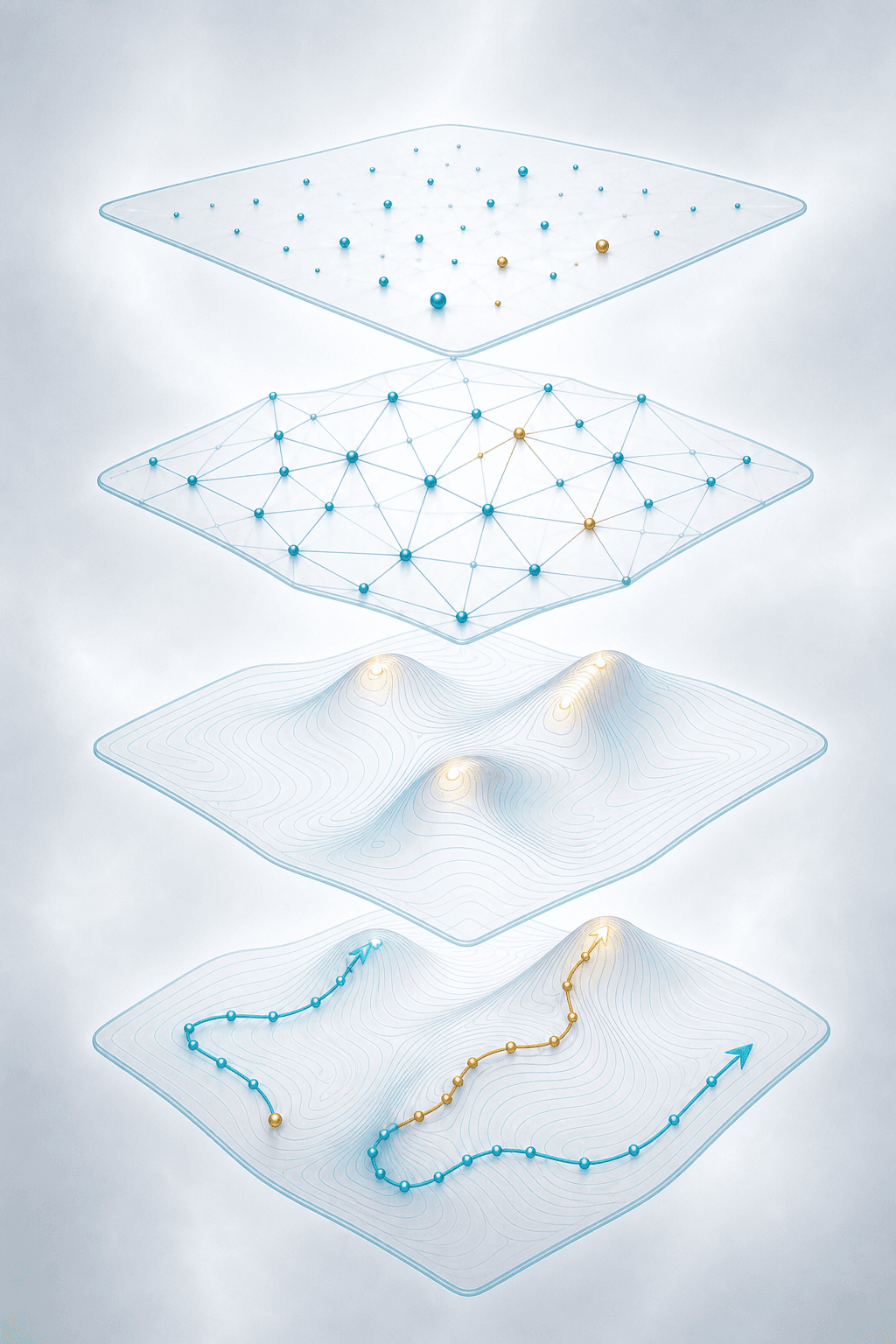
An adaptive landscape model diagram with a value surface, search path, and structural guides.An adaptive landscape model diagram with a value surface, search path, and structural guides.
2 available units

Adaptive Landscapes

A landscape is a space, a value function, a neighborhood, and a search process. By progressively relaxing assumptions, each unit reveals why adaptation, search, emergence, and complexity are inseparable.

19 units 17 planned Guided notes
AlphaThis course is in alphaVisit Course
Planned courses in this series
  • 2

    Philosophy of Complex Systems

    Emergent patterns press on older ideas about reduction, causation, objectivity, explanation, intervention, and responsibility.

    6 units
  • 3

    Vibe-Coding Agent-Based Models

    A model starts with a pattern, proposes a mechanism, turns that mechanism into interacting agents, and tests what the simulation can responsibly claim.

    5 units
  • 5

    Decomposability, Nonlinearity, and Intensive Differences

    Decomposition is the default strategy for understanding anything: break it into parts, study them separately, add the results. This course asks when that strategy works, when it fails, what formal tools detect the failure, and what the failure reveals about the relationship between wholes and parts. It also asks the opposite question: when does holistic language overreach, mistaking mere relation or explanatory convenience for genuine non-decomposability? The recurring signatures of non-decomposable systems are intensive properties (properties that do not add under combination, like temperature or density) and nonlinear couplings (interactions where each part's behavior depends on the states of the others).

    13 units
Extra Flash Card Sets

Practice the introduction from another angle