Back to Complexity SeriesComplexity course

Introduction to Complex Systems

How interacting parts produce collective behavior

StartCourse PathAlphaThis course is in alpha
From interaction to collective behavior

A system is complex when its parts interact in ways that shape the behavior of the whole.

The central question is what changes when parts affect one another.

Open unit
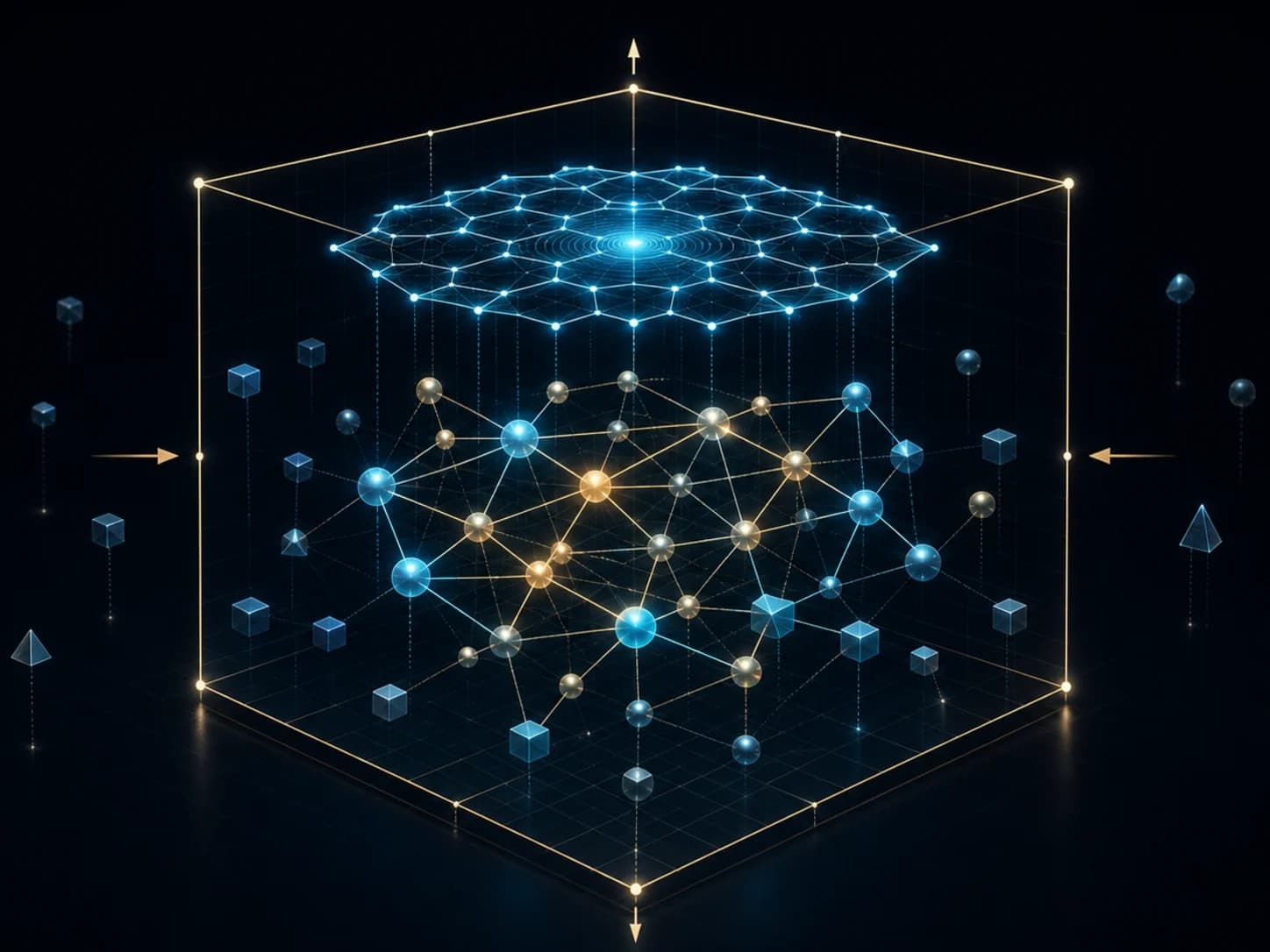
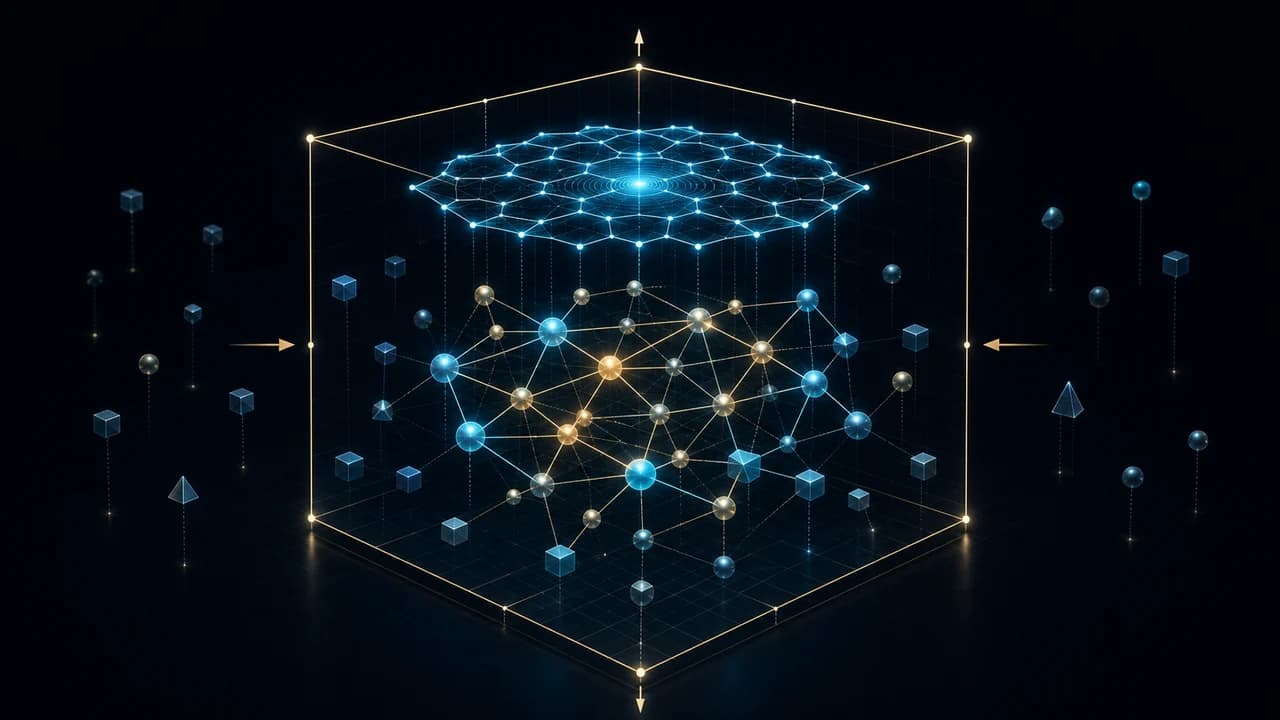
A bounded component network lifts into an emergent lattice while unconnected parts remain outside the pattern.
Primer

What Makes a System Complex?

A system becomes complex when relationships among its parts shape the behavior of the whole. This unit introduces systems, components, boundaries, state variables, emergence, nonlinearity, and scale. It treats simple, complicated, complex, chaotic, and random as overlapping ways of seeing: a jet engine is complicated because its many parts are designed to be separable, traffic is complex because local driver interactions create system-wide jams, and weather is both complex and chaotic. Real systems often straddle more than one category.

60 minReader lesson
Open unit
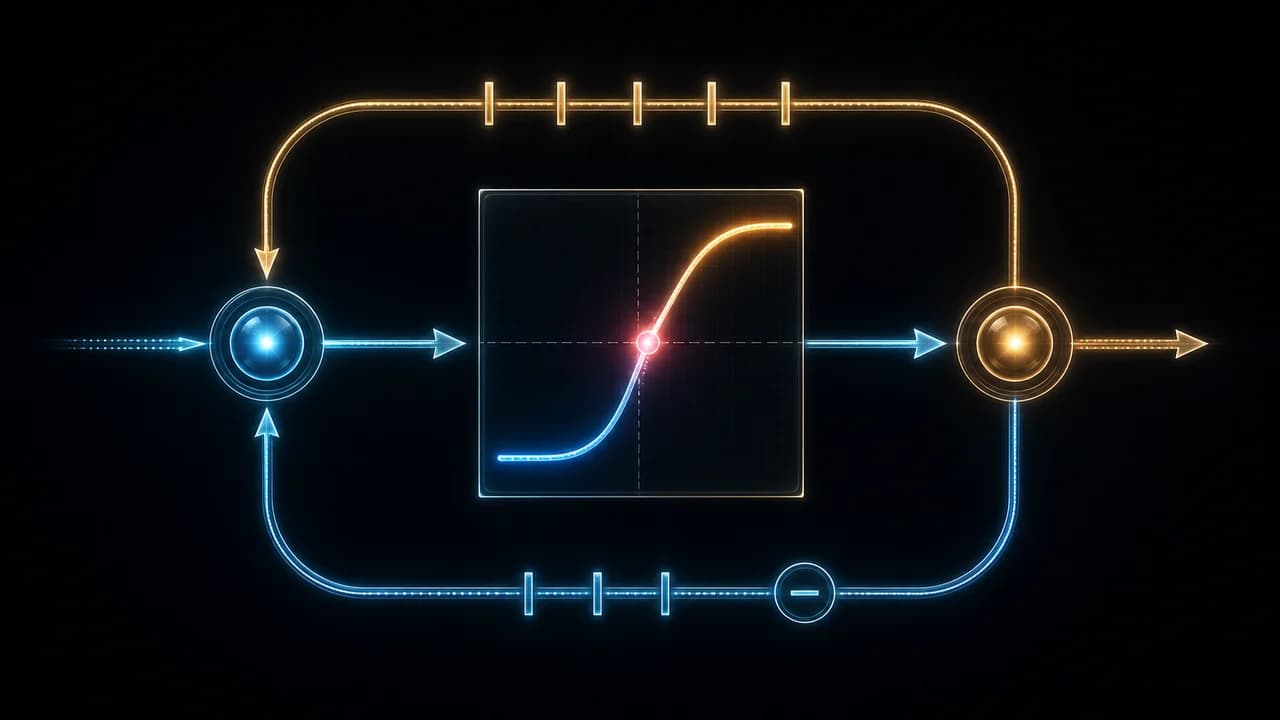
A nonlinear response curve sits inside a delayed return loop where output comes back as input.
Feedback

Feedback, Nonlinearity, and Delay

Feedback occurs when outputs loop back to influence future inputs. Positive feedback reinforces change; negative feedback regulates it. Both can produce surprising behavior when delays, thresholds, or amplification are present. This unit separates feedback from nonlinearity: feedback is about circular causation (effects returning to reshape their own causes), while nonlinearity means outputs are disproportionate to inputs. You will examine thermostats, bank runs, predator-prey cycles, and platform lock-in to see why well-intended corrections can overshoot, oscillate, or backfire.

60 minReader lesson
Planned units in this course

Planned units

  • 02
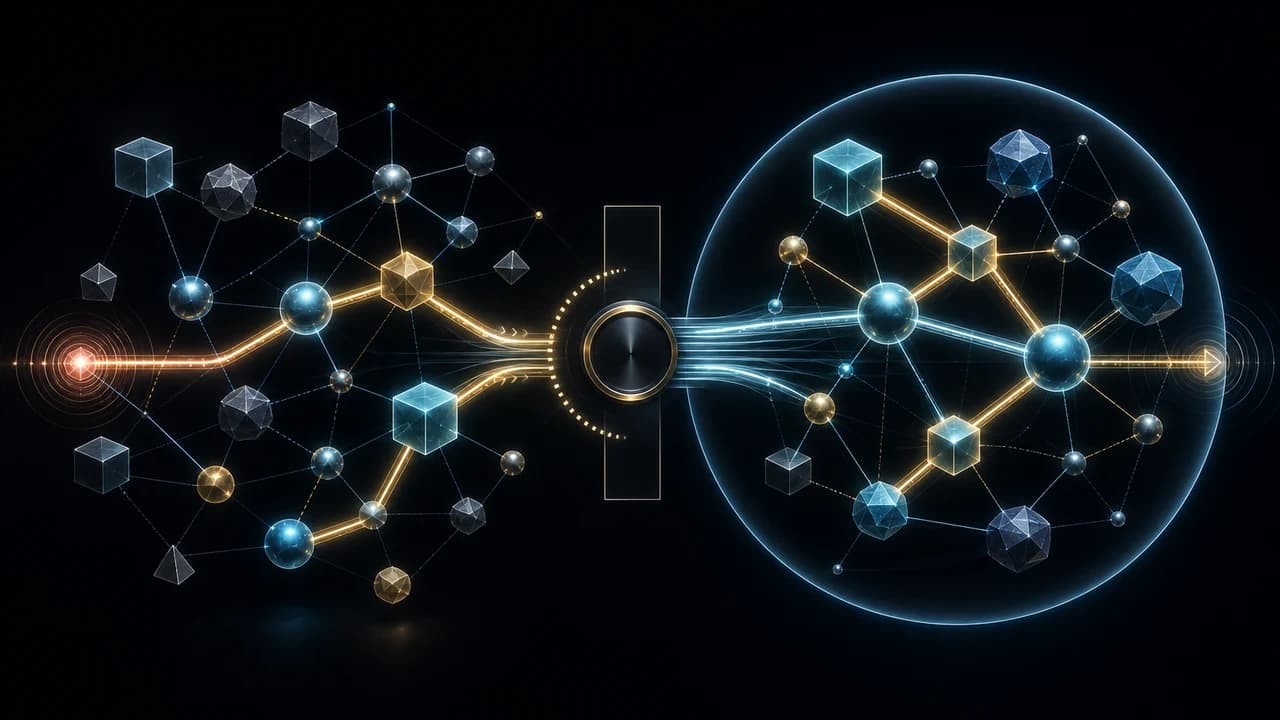
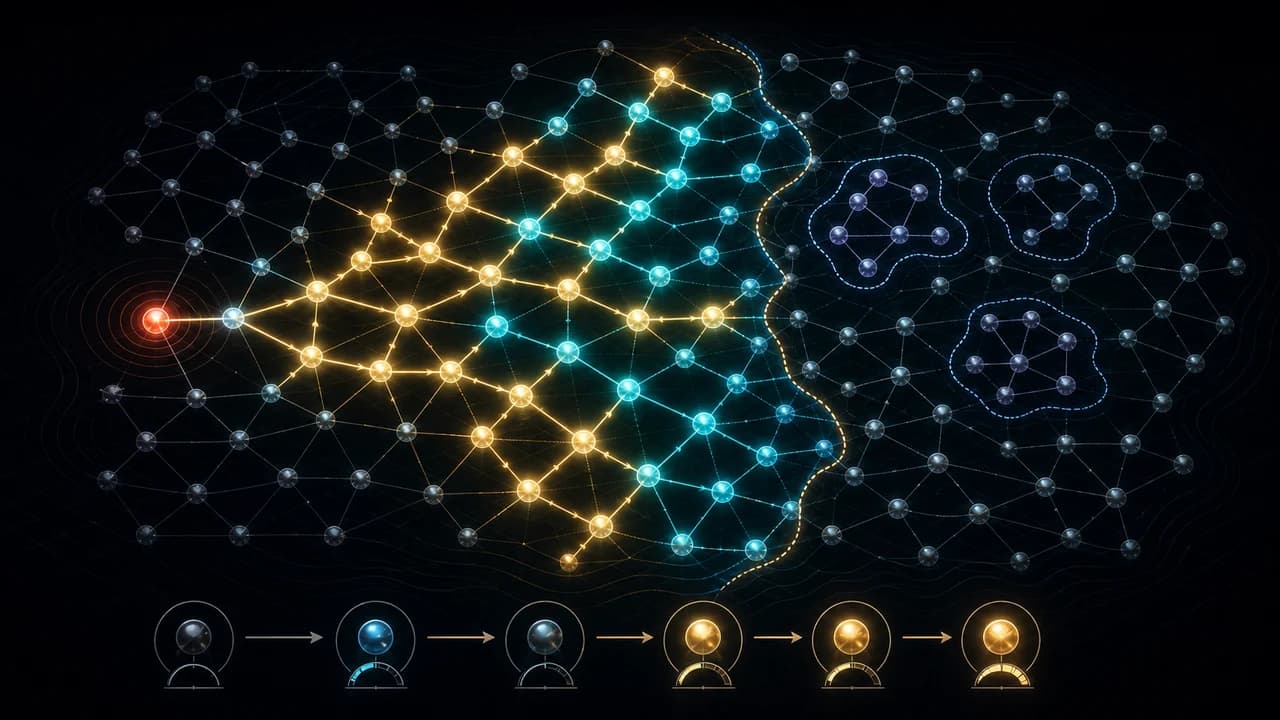
    A disturbance travels through strongly coupled component clusters while weaker links stay dim.

    Parts, Boundaries, Interactions, and Coupling

    Every complex-systems analysis begins by deciding what counts as inside the system, what stays outside, and how the parts influence one another. This unit introduces components, boundaries, state variables, heterogeneity, coupling strength, local versus global interaction, direct versus indirect effects, and timescale. Weak coupling leaves parts mostly independent; strong coupling allows disturbances, information, or failures to propagate. How tightly and asymmetrically the parts are connected often matters more than what the parts individually are.

    Planned / 50 min
  • 04
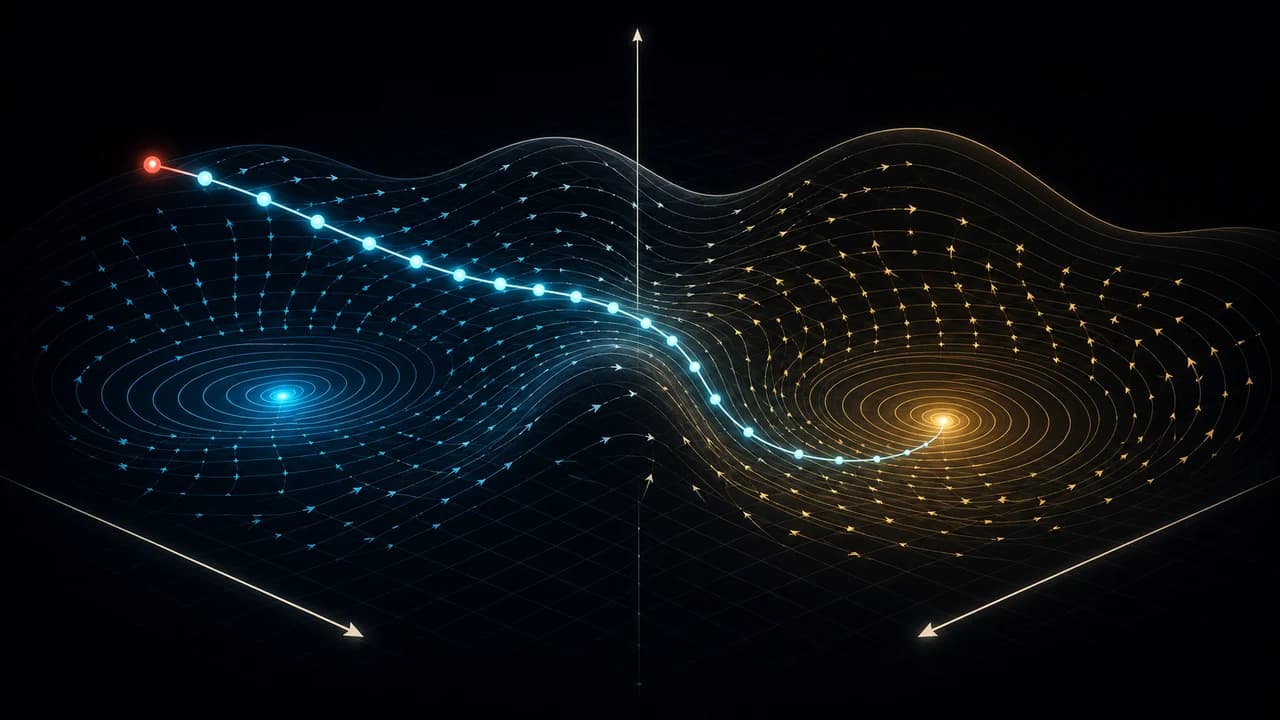
    A trajectory moves through a coordinate state space with vector arrows and attractor basins.

    State Space and System Dynamics

    A system's state is the information needed to describe where it is right now. A state space is the set of all states the system could occupy, and a trajectory is the path it takes through that space over time. This unit introduces equilibria, attractors, basins of attraction, stability, instability, tipping points, and regime shifts. A lake, for example, can stay clear after small nutrient additions, yet beyond a threshold it can flip into a turbid algae-dominated state. The same push can have very different effects depending on where the system already sits.

    Planned / 50 min
  • 05
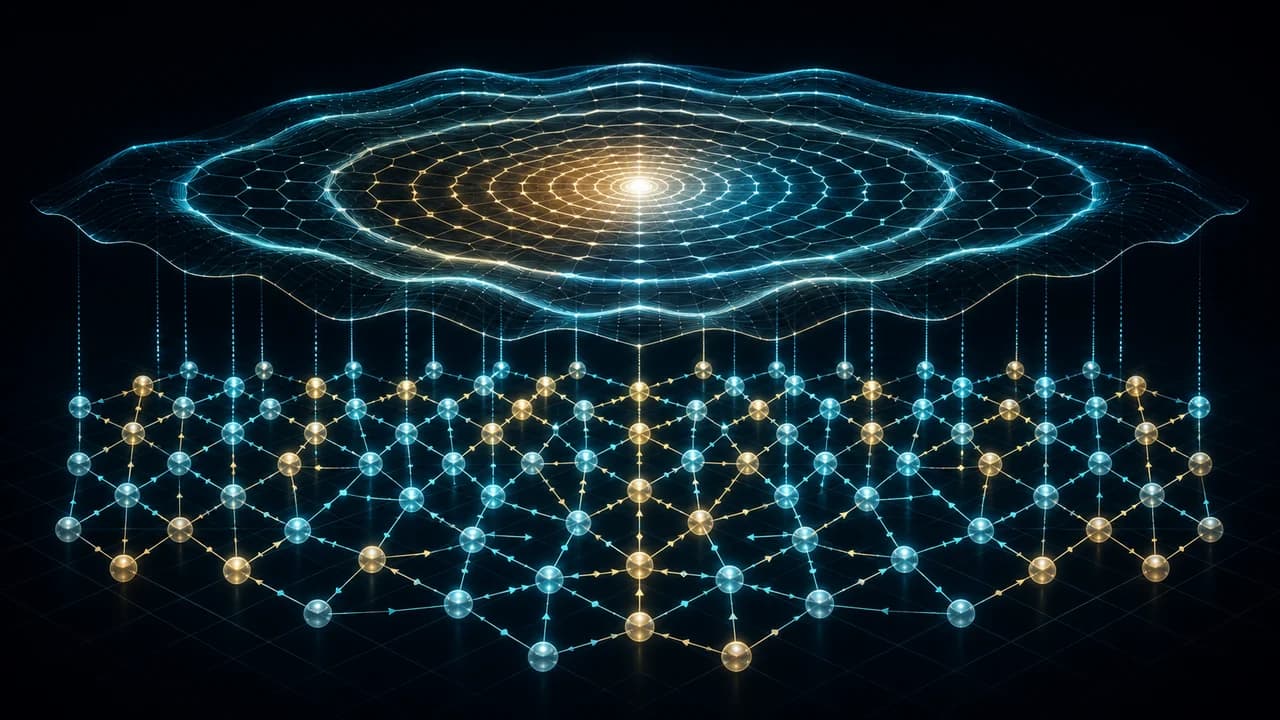
    Local-rule agents on a lattice generate a coherent macro-pattern above their interactions.

    Emergence and Self-Organization

    Emergence is the appearance of macro-level patterns generated by lower-level interactions. Self-organization occurs when coherent order arises without a central designer, though still under constraints from rules, resources, and interaction structure. This unit uses flocking, traffic jams, cellular automata, and segregation models to show how local rules can produce global patterns that no individual part intended. The key discipline is always asking: what specific micro-rules are sufficient to generate the observed macro-pattern, and could the pattern be an artifact of how we are measuring?

    Planned / 55 min
  • 06
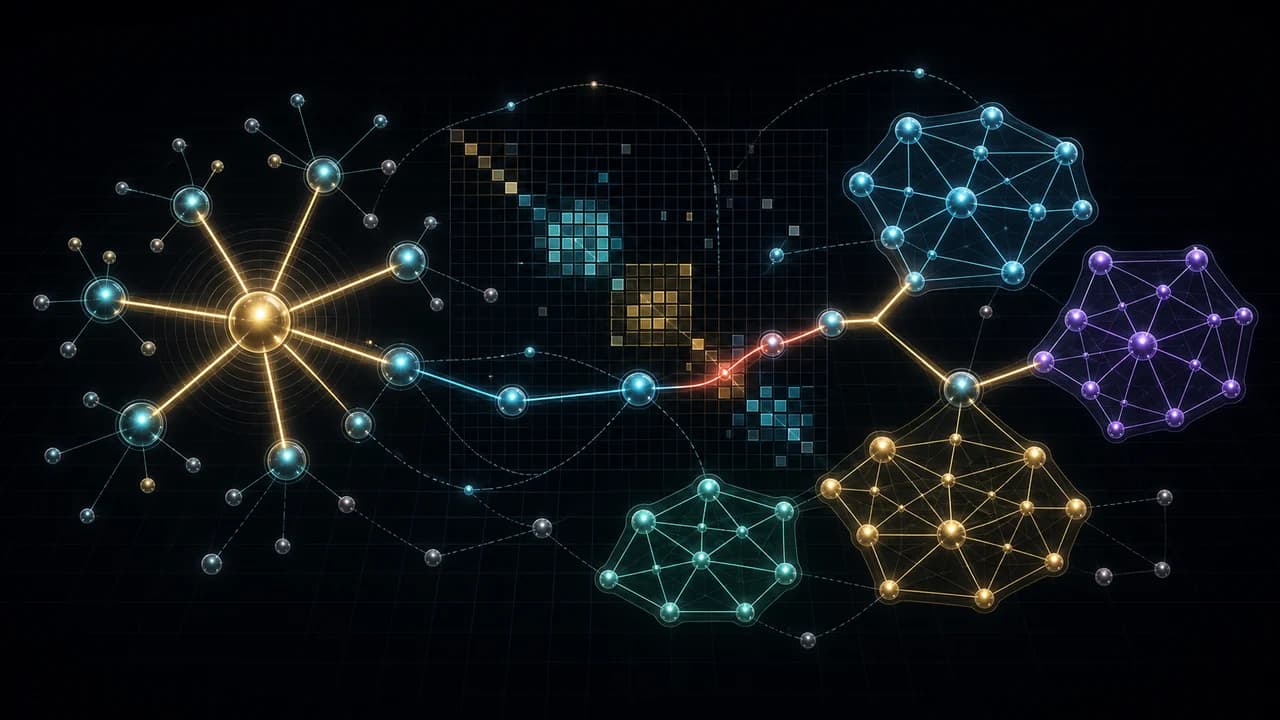
    The same node set forms hubs, modules, bridges, weak ties, and different paths of influence.

    Networks

    Networks represent systems as nodes connected by edges, and they become explanatory when paired with a process that moves across them. This unit introduces degree, hubs, paths, clustering, bridges, centrality, modularity, and small-world structure. You will learn why bridges spread information across communities, why hubs can accelerate diffusion or create single points of failure, and why the same network can be robust to random disruption yet fragile under targeted attack. Scale-free networks are taught as an influential model and open empirical question, since recent large-scale studies find strong scale-free evidence to be uncommon in real-world data.

    Planned / 60 min
  • 07
    A threshold cascade spreads through connected nodes while resistant pockets stay inactive.

    Diffusion, Contagion, Cascades, and Thresholds

    Many things spread through connected systems, yet they spread by different mechanisms. A virus can spread through a single contact. Adopting a new behavior may require seeing multiple neighbors do it first. A bank failure can cascade because balance sheets are linked. This unit distinguishes simple contagion, complex contagion, threshold cascades, and failure cascades. Cascade size depends jointly on network structure, transmissibility, individual thresholds, timing, and the distribution of vulnerable nodes.

    Planned / 55 min
  • 08
    A simulation grid of rule-bound agents links local interactions to measured macro output.

    Agent-Based Modeling

    Agent-based models explain macro-patterns by building them from the bottom up: heterogeneous agents following local rules interact in an environment, and the simulation shows what collective behavior those rules can and cannot generate. This unit introduces the basic ingredients (agents, attributes, rules, environment, interaction topology, update order, randomness, and outputs) and the key failure modes: arbitrary rules, weak calibration, insufficient sensitivity analysis, and mistaking a plausible simulation for proof. You will learn to use ABMs as disciplined tools for testing proposed mechanisms, following Epstein's challenge: if you did not grow it, you did not explain it.

    Planned / 60 min
  • 09
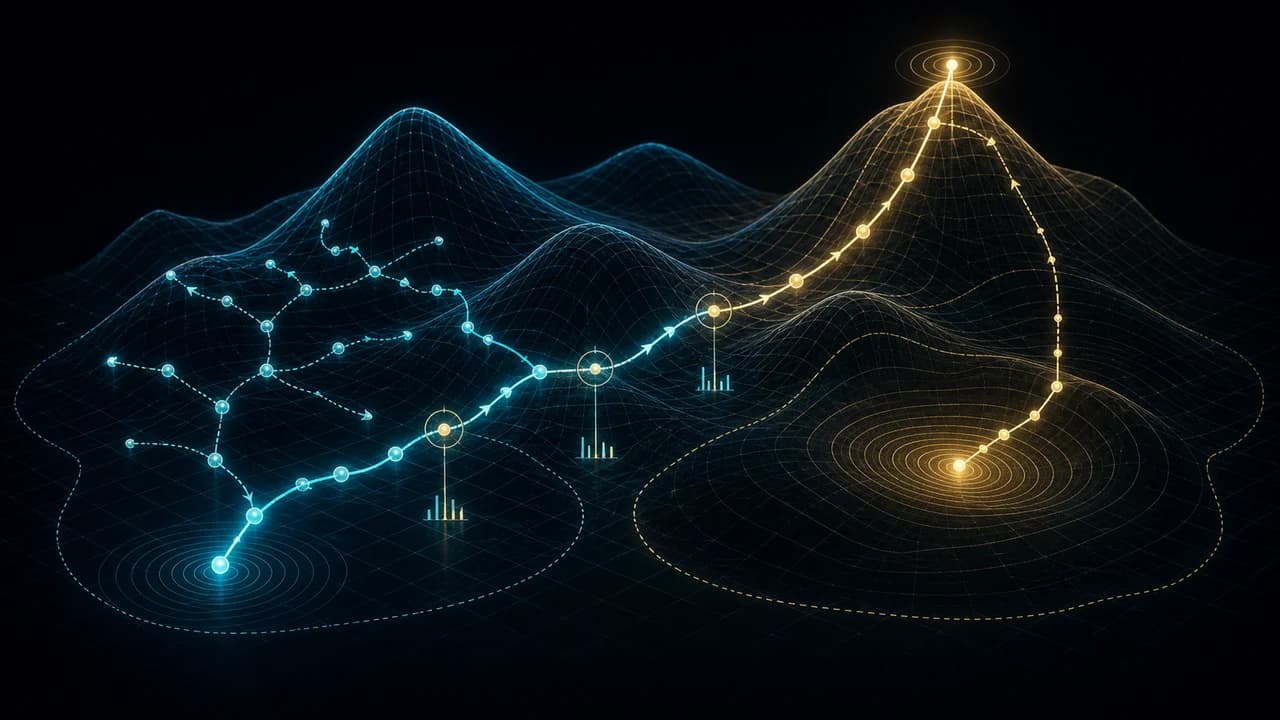
    An adaptive search path explores, climbs, and gets trapped across a value landscape.

    Adaptation, Learning, and Evolution

    Complex systems often contain agents or populations that change their behavior in response to feedback. This unit introduces selection, reinforcement, learning, exploration, exploitation, local optima, coevolution, and evolutionary dynamics. Adaptation does not guarantee progress: local learning can create system-level traps, arms races, overfitting, or tragedies of the commons. The key questions are who is adapting, using what feedback, on what timescale, and with what side effects for the rest of the system.

    Planned / 55 min
  • 10
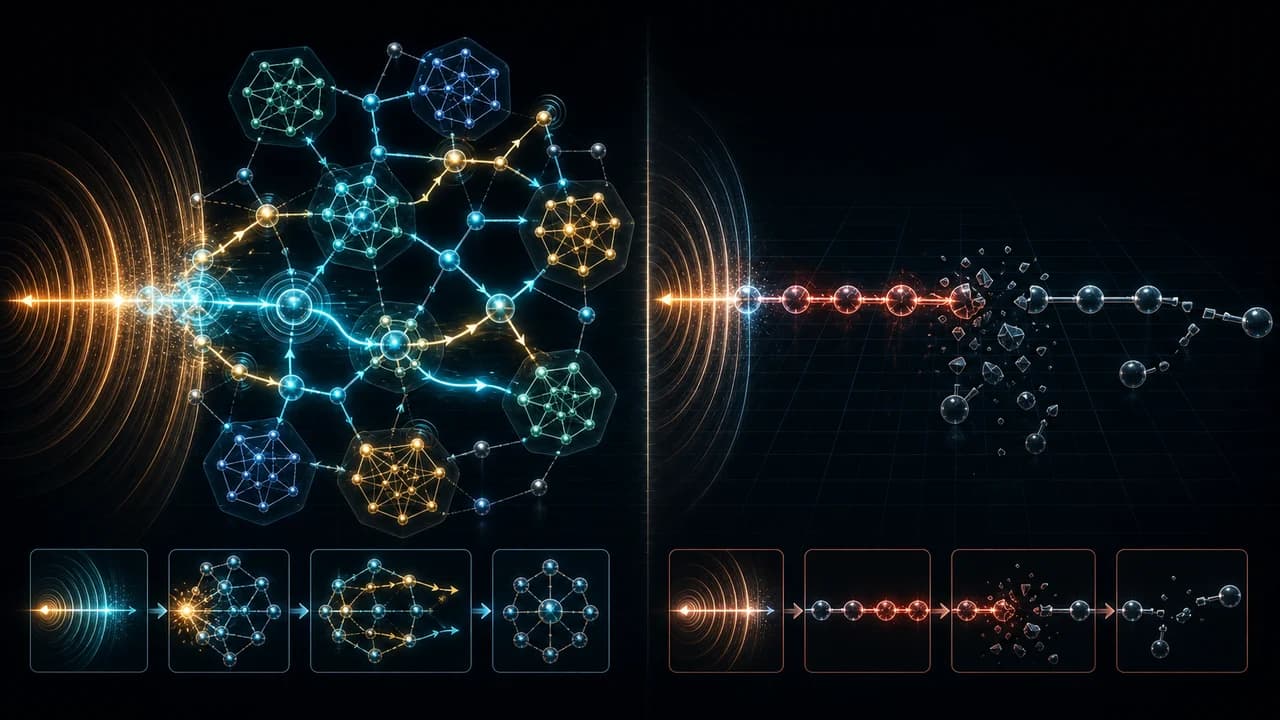
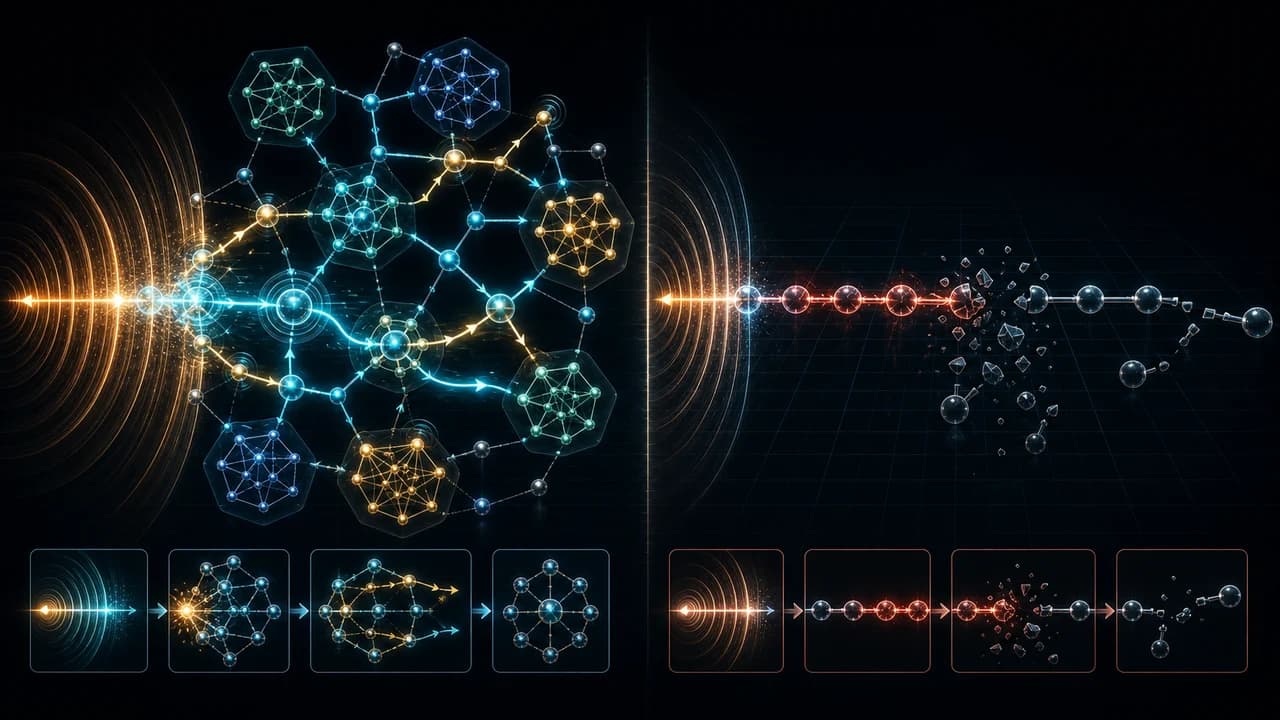
    A modular redundant network reroutes a shock while a brittle optimized chain fractures.

    Robustness, Resilience, Fragility, and Antifragility

    Fragile systems amplify shocks. Robust systems maintain function under disturbance. Resilient systems absorb shocks, recover, and reorganize. Antifragile systems gain from disorder: they grow stronger through exposure to stressors, the way bones strengthen under load, immune systems learn from pathogens, and post-traumatic growth can reshape a person after crisis. This unit examines redundancy, modularity, diversity, slack, graceful degradation, cascading failure, adaptive capacity, and the conditions under which stress becomes a source of improvement. You will compare ecosystems, supply chains, infrastructure, and financial systems to see why efficiency can reduce safety when it removes slack, and why some systems need volatility to stay healthy.

    Planned / 55 min
  • 11
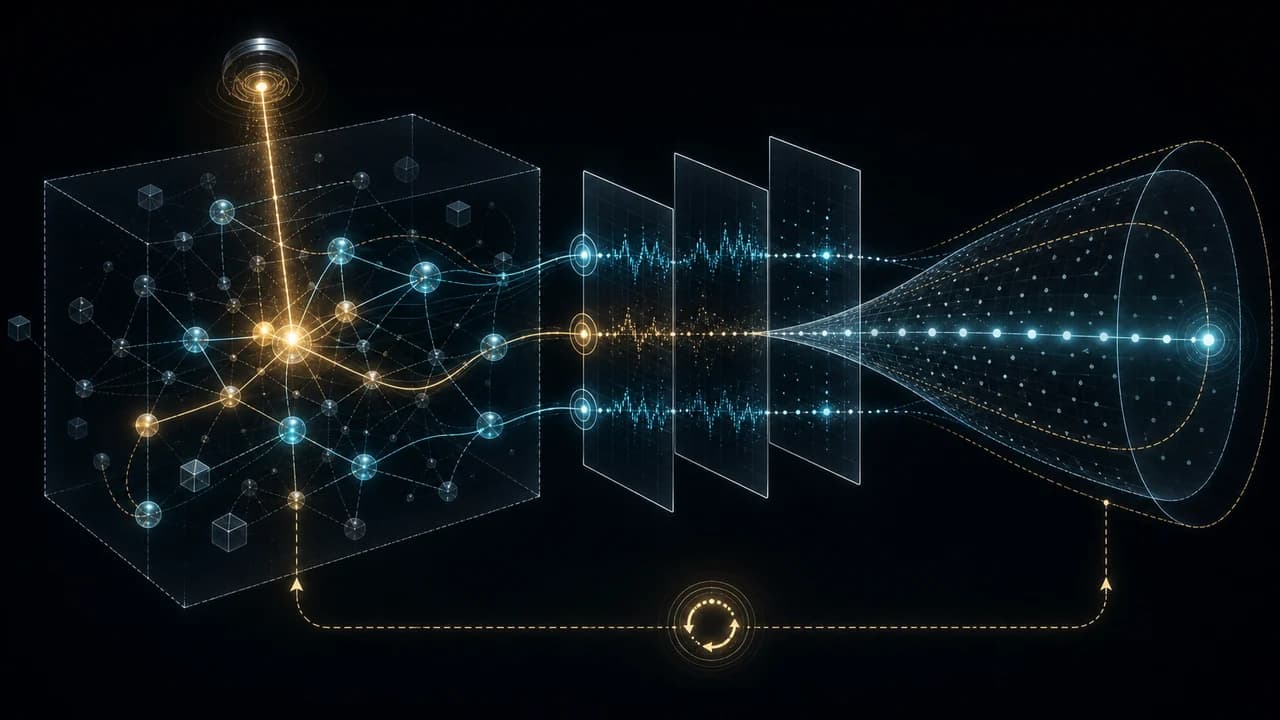
    A partially hidden system sends noisy observations through measurement planes into a widening prediction cone.

    Information, Measurement, Uncertainty, and Reflexivity

    Complex systems are often only partially observable. We see noisy measurements, delayed indicators, proxies, and model outputs rather than the full system state. This unit introduces signal, noise, observability, hidden variables, prediction error, model uncertainty, and metric choice. In social and adaptive systems, measurement itself changes what is measured. Once a metric becomes a target, agents may adjust their behavior to improve the score while the underlying reality worsens. Goodhart's law is best understood as the interaction of measurement, incentives, and feedback.

    Planned / 55 min
  • 12
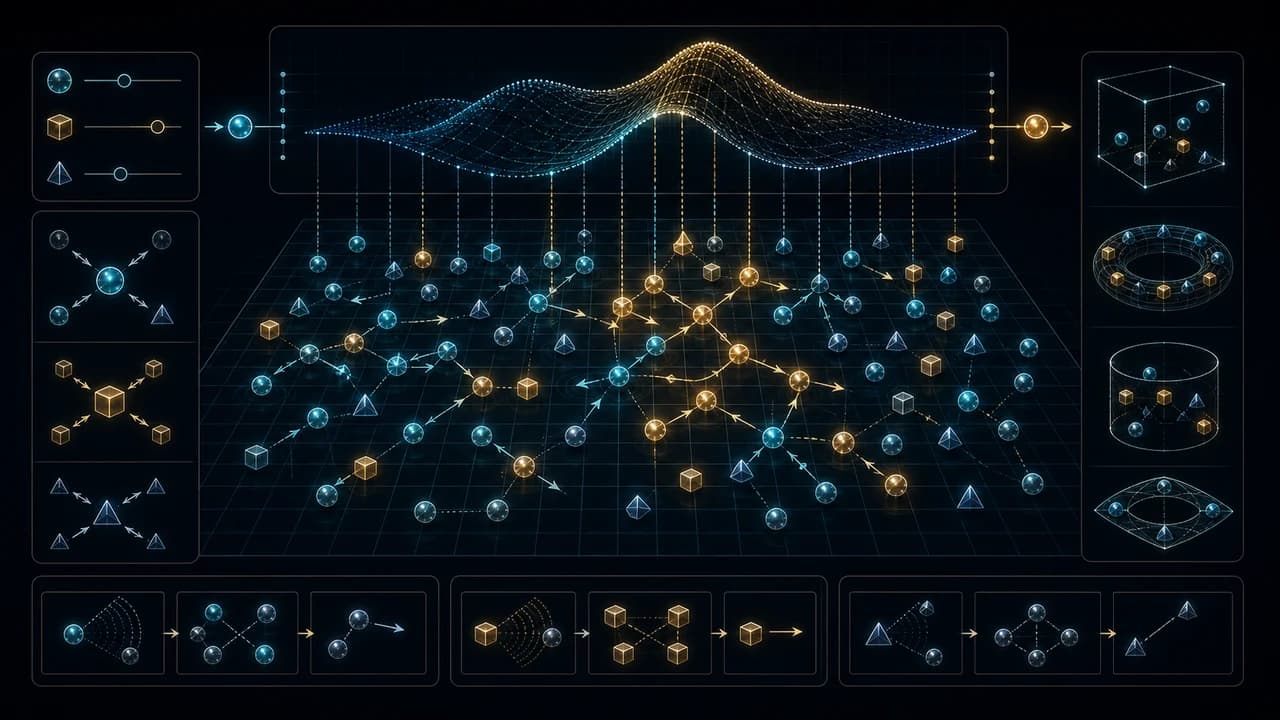
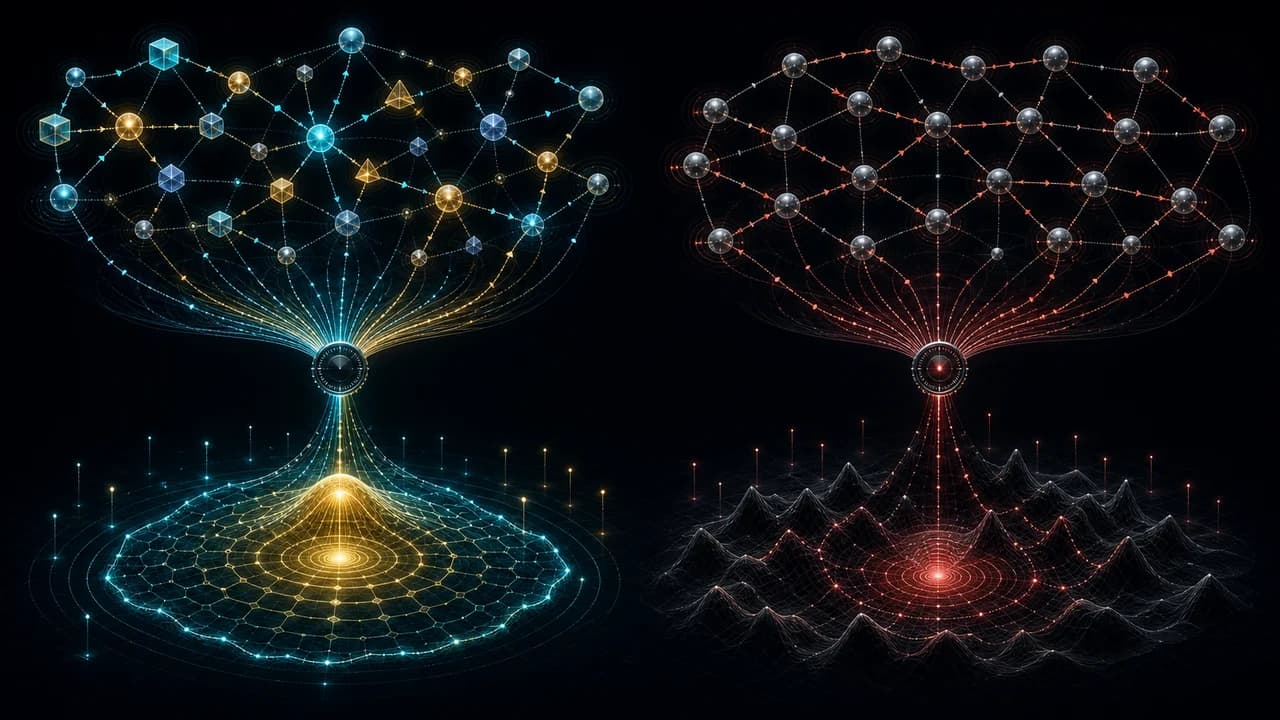
    Distributed agents pool diverse signals into a solution field beside a correlated-error cluster.

    Collective Behavior and Collective Intelligence

    Collective behavior emerges when many agents coordinate, imitate, compete, or respond to shared environments. Collective intelligence is more demanding: it requires that useful information is distributed across participants, that participants can contribute it, and that the system aggregates it without being overwhelmed by herding, correlated error, or manipulation. This unit covers swarms, crowds, teams, prediction markets, institutions, and platforms. You will learn why groups sometimes outperform individuals and sometimes fail spectacularly, and how to diagnose which conditions push a collective toward wisdom or toward breakdown.

    Planned / 60 min
  • 13
    An intervention lever sends delayed ripples through a connected system with feedback paths and unintended consequences.

    Leverage, Intervention, and System Design

    Understanding a complex system is a different skill from intervening in one. This capstone asks how to act when causation is distributed, feedback is delayed, incentives are adaptive, and measurement is incomplete. You will learn why tweaking parameters is often a weak intervention, why changing information flows or rules can be more powerful, and why interventions can backfire when they shift behavior elsewhere in the system. The course ends with a diagnostic exercise: choose a real system, map its interactions and feedbacks, identify likely failure modes, and propose an intervention with explicit uncertainty about unintended consequences.

    Planned / 60 min
Extra Flash Card Sets

Introduction to Complexity

Thomas Meli